
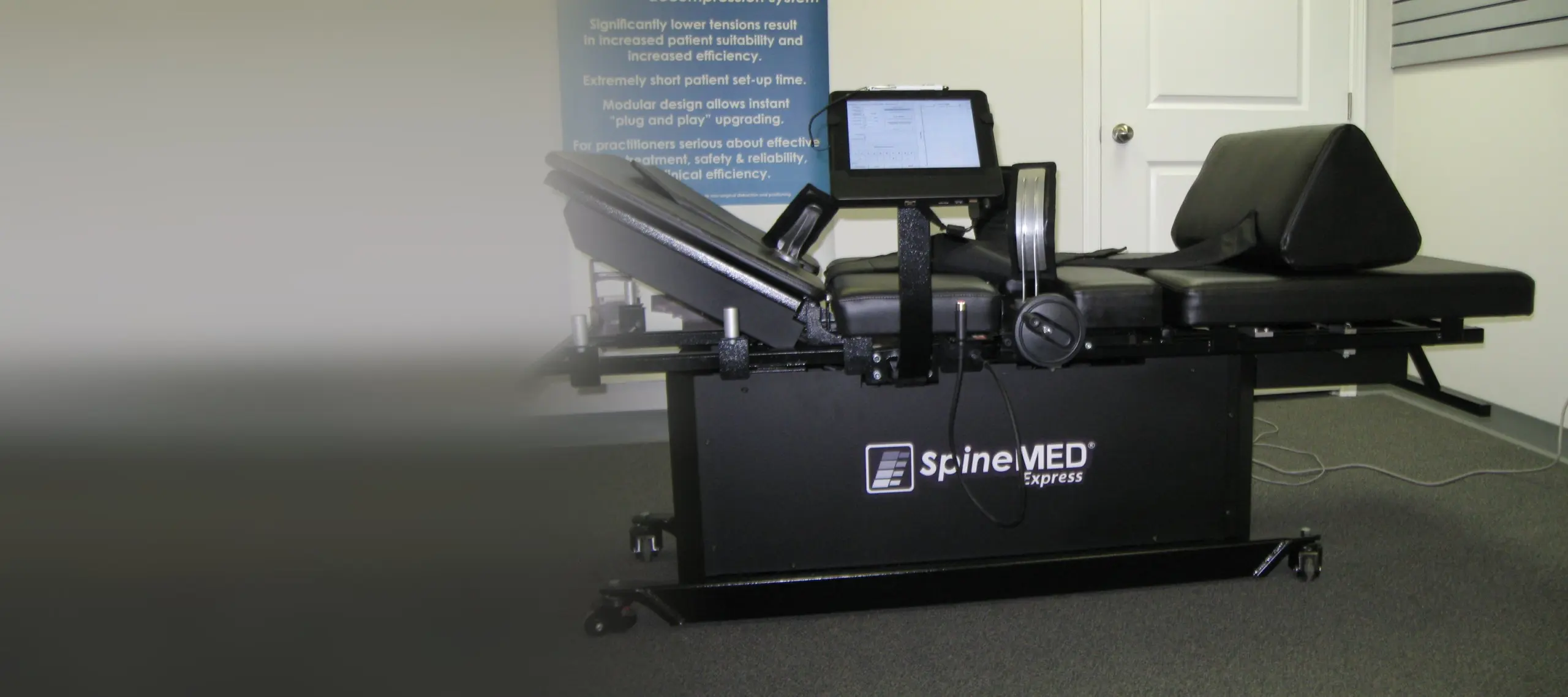
Non-surgical decompression
Spinal Decompression
Computer-controlled decompression devices for chronic neck and lower-back conditions.
How does spinal decompression work?
During treatment the patient lies comfortably on the decompression table, with the pelvis and upper body secured by special harnesses. The computer-controlled system gently separates the affected section of the spine with a controlled, rhythmically varying traction force. This reduces the pressure on the discs and temporarily creates negative pressure (a suction effect) inside the disc. The pressure reduction can help retract bulging disc material and draw water, oxygen and nutrients into the disc, supporting its regeneration. The system continuously monitors the patient's muscle response so that the traction does not trigger protective muscle guarding. A session typically lasts 20–30 minutes and is performed as a course of several treatments.
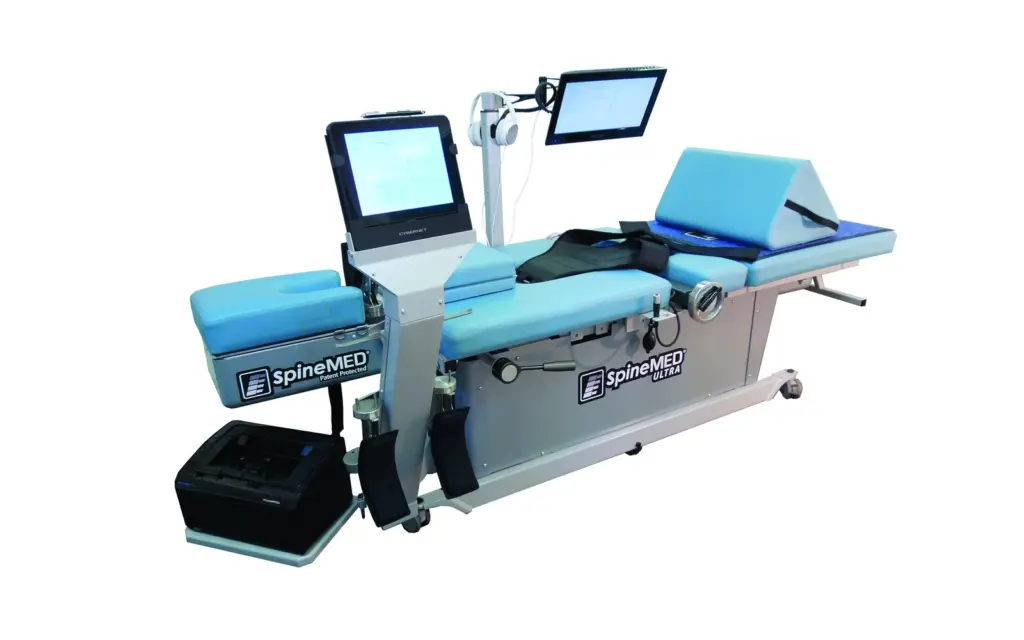

SpineMED Professional
SpineMED Professional: touchscreen-controlled full-spine (lumbar + cervical) decompression for clinics.
Details→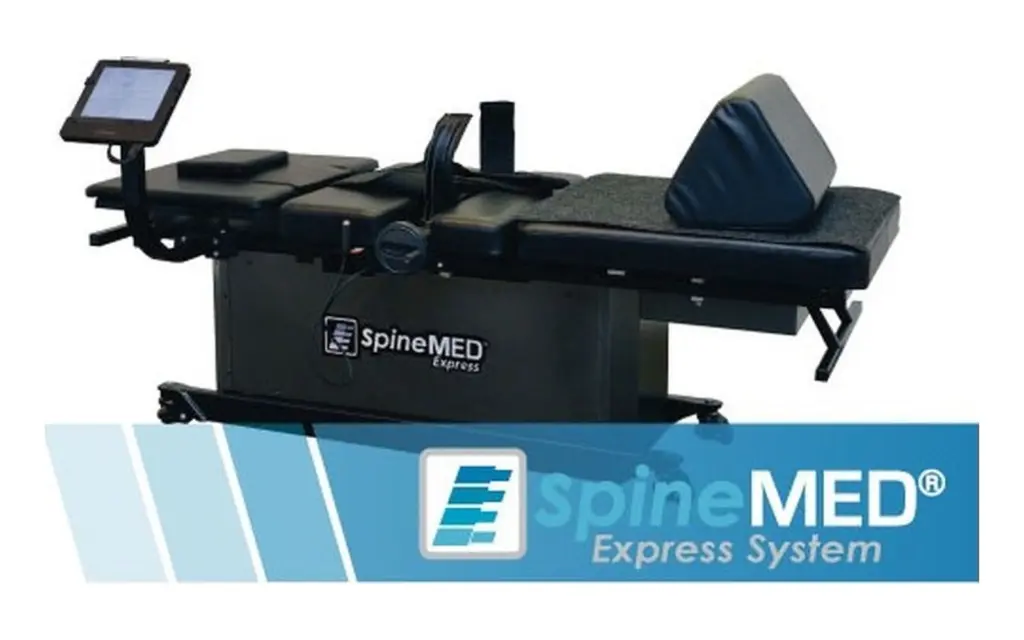
SpineMED Express
SpineMED Express: compact, mobile design – flexible lumbar and cervical decompression on wheels.
Details→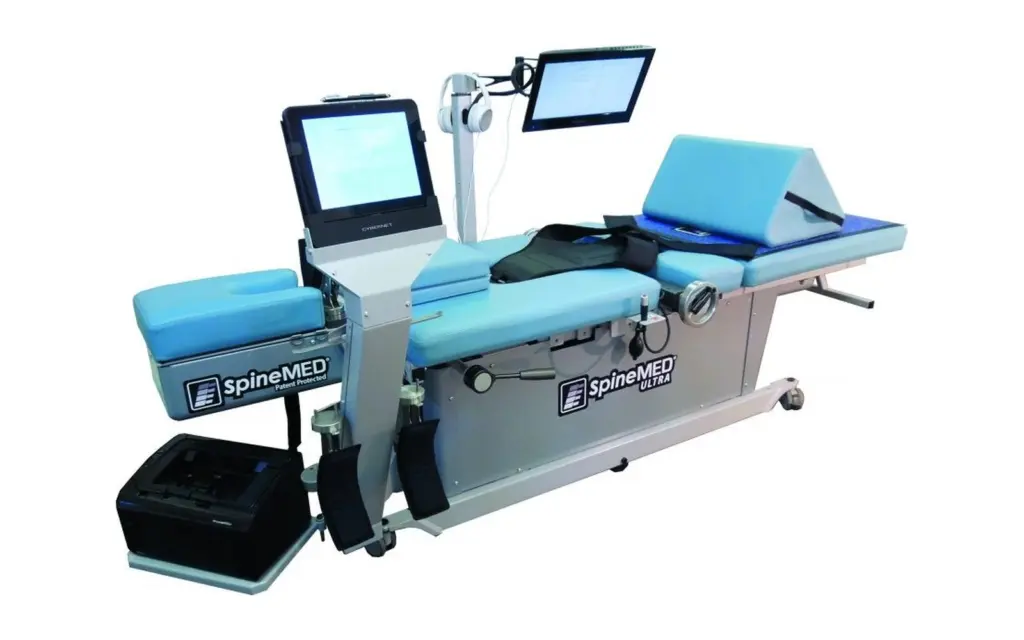
SpineMED Ultra
SpineMED Ultra: hospital-grade flagship with built-in UPS backup and full documentation system.
Details→Spinal Decompression – good to know
Why relieve pressure on the discs?
The spine consists of a chain of bones called vertebrae, separated by intervertebral discs that act as cushions, absorbing shock to the spine. The discs are nourished by fluids, nutrients and oxygen supplied from the upper and lower surfaces of the neighbouring vertebrae. During sitting, bending and lifting, however, they are under compression for almost the entire day, which hinders their nourishment and regeneration. If the pressure is not reduced, the disc can bulge and the protruding material may press on the spinal nerves.
Fields of application
Spinal decompression is used to treat chronic cervical and lumbar spinal conditions, including some that previously could only be addressed surgically. Typical indications are disc herniation, degenerative disc disease, sciatica, radiculopathy, facet syndrome, spinal stenosis, and pre-operative and post-operative conditions. The target segment is stretched gradually under controlled conditions, a procedure that involves neither pain nor discomfort.
Common features of the SpineMED systems
All three SpineMED models are FDA-cleared and use a patented pelvic restraint and tilting mechanism for targeted, gradual axial traction. The base unit handles lumbar treatment on its own; cervical treatment is provided by an attachment or an integrated version. Patient weight capacity for the Professional and Express models is 32–227 kg.