
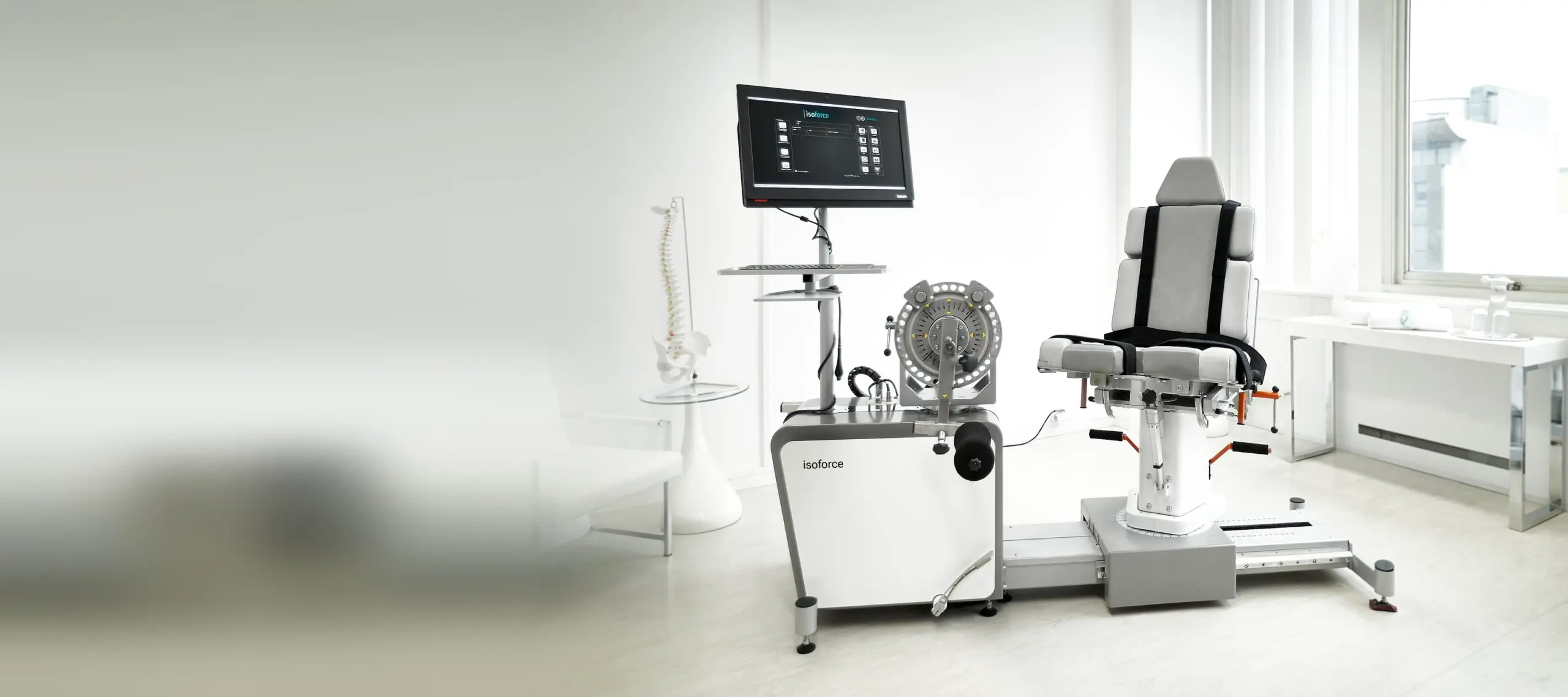
Isokinetic assessment and rehabilitation
Isokinetic Rehabilitation
TUR isoforce isokinetic rehabilitation and assessment system for neuromuscular testing, active rehabilitation and progress monitoring.
How does isokinetic rehabilitation work?
The patient sits in the machine's chair or stands, and the limb being treated is attached to the dynamometer arm. The machine maintains a constant speed throughout the range of motion and provides exactly as much resistance as the force the patient exerts. The muscle therefore works at every point of the movement according to its current capacity, without overload – which is particularly safe after surgery or injury. Meanwhile the dynamometer measures force, torque and range of motion, so side-to-side differences and progress can be tracked in numbers. Based on the measurements, the therapist can decide objectively on increasing the load and on the return to sport. The method is used in orthopaedic, sports and neurological rehabilitation alike.
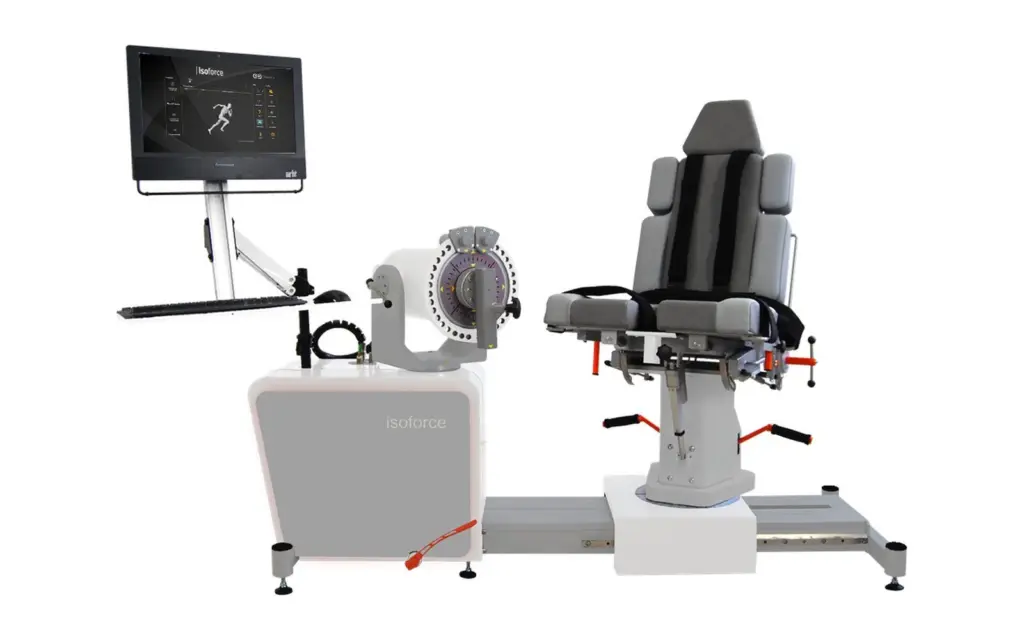

Isokinetic Rehabilitation – good to know
Most common fields of application
Typical applications are knee rehabilitation after anterior and posterior cruciate ligament (ACL, PCL) reconstruction and the restoration of strength symmetry after shoulder surgery (rotator cuff, SLAP). For athletes it is used for peak performance assessment and injury prevention screening, and for neurological and orthopaedic patients for assessing functional strength and balance. With work simulators it also supports occupational rehabilitation and the return to work. The system is suitable for healthcare, sports and research settings alike.
Testing, rehabilitation and progress monitoring
The isokinetic dynamometer is both a measuring and a therapeutic device: by recording force, torque and angular velocity, it provides a detailed neuromuscular profile. The system therefore serves three purposes – testing, active rehabilitation and progress monitoring. Detailed test reports quantify and document strength, balance and functional performance.